What It’s Like Teaching English in Korea with Children

If you are considering high school students in Korea, then you should know some facts about studying children in Korea. Below, you will know the things that you should know while teaching English in Korea.
Your Students Might Be Shy
Unlike students in the U.S. and elsewhere, many older Korean students won’t speak unless spoken to first. Therefore, a “free conversation” class won’t flow well without extra guidance. While you might be tempted to call out students to answer questions if no one is raising their hand or answering your questions, it’s best not to single anyone out. Instead, incorporate partner and group activities to get high school students talking.
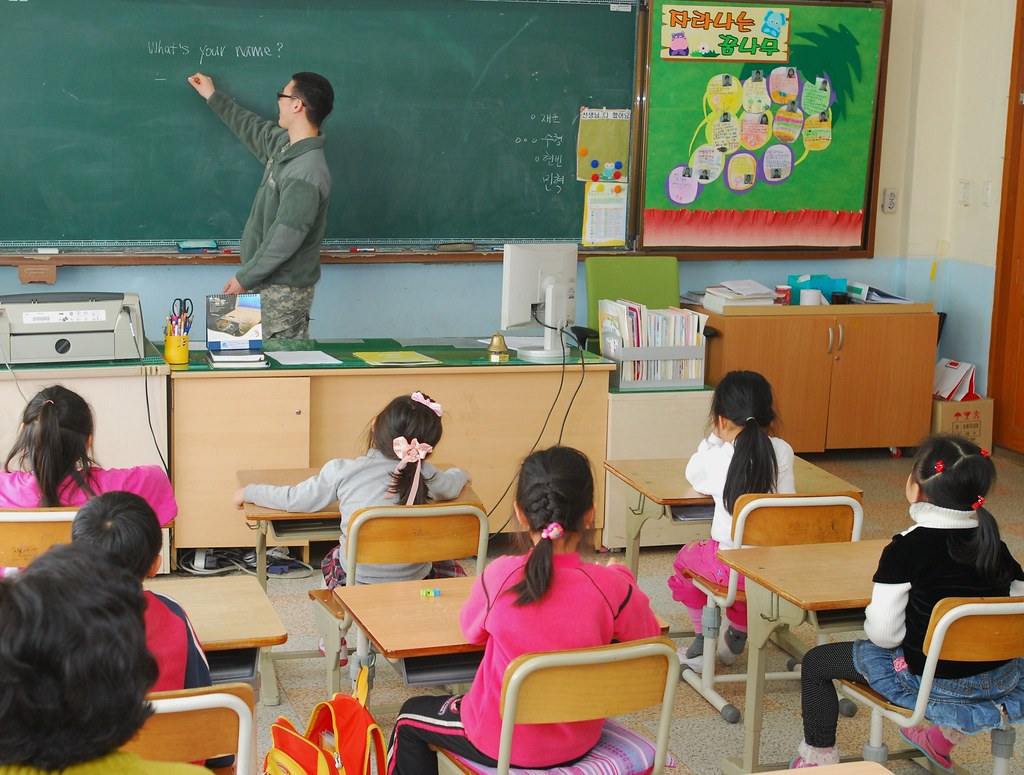
And as mentioned in the previous section on teaching younger children, you may or may not have a co-teacher by your side in the classroom. If you have a co-teacher, your job might be limited to speaking-lessons only. If this is the case, ensure you incorporate lessons that vary from the usual grammar lessons they might have with the Korean co-teacher. Role-play, have students draw an English comic, or assign a simple culture presentation to keep things interesting.
Say “Yes” to Extra Duties
Culture and duties will vary from school to school, but for the best relationships with your students and coworkers, be ready to say, “okay!”
From speaking tests to sporting events, extra duties might pop up now and then. While you don’t always have to say, “Yes,” agreeing to lend a hand is the best way to be “part of” the school and not just working for it. While this piece of advice goes for all ages, it’s especially true in high schools, where the entire school is working together to prepare its students for exams and university.
Teaching University Students & Adults in South Korea
If the idea of singing songs and reading, “Brown Bear, Brown Bear,” isn’t for you, you might consider teaching adults. From teaching university students to CEOs to retired grandmas with extra time on their hands, teaching adults is exciting. However, it’s also perhaps the most tiring. Unlike the usual morning or afternoon time slots teaching children and high school students entails, teaching adults almost always requires accepting a “split-shift” schedule. Read on to learn more about split-shifts and other things to keep in mind when teaching adults below.
Prepare for Split-Shifts
Because adults usually have full-time jobs already, they can’t come to class in the middle of the day. Therefore, your own English adult teaching schedule might be split into morning and afternoon shifts. For some teachers, this shift introduces a well-needed long lunch break in the middle of the day that includes time for the gym and self-care. For others, it leaves them with little time left to explore South Korea.
In addition, many adults like to take classes on the weekends, so usually some Saturday teaching hours are required. While a split-shift with Saturdays might seem like a schedule made by Hades, the tradeoff for teaching adults, is enough to tip the scales for some.
You Might Need to Teach Job Specific or Business Language
Often, adult English classes are “free conversation,” for adults to spruce up the English they learned during school. For others, English and job-related jargon is vital to keeping their job or getting a promotion. Depending on your school, you might teach business English, nursing English, banking English, or other English specific to a job market in South Korea.
You Should Dress Professionally
If you teach children, you’ll be advised to wear something modest, put-together, and not-too-nice (in case of paint spills, marker smudges, and maybe boogers.) While high school teachers should update their wardrobe, too, adult English teachers especially should have a professional wardrobe. You don’t want to go into a 1-on-1 lesson with the CEO of a major company looking like your just rolled out of bed. Collared shirts and ties are the norms for men, and dresses or nice skirts and blouses are acceptable for women.
While you might be eager to get to South Korea to explore the mountains, the cuisine, and the soju, it’s important to first carefully consider which age group best suits your personality and teaching style. A stressful English teaching job in Korea with the wrong age group for you won’t make Korea any less beautiful. But, teaching the right age group in the right teaching opportunity will only enhance your experience.
Latest comments
No comments

About ✔ Terms ✔Privacy
Say and get NFT
© 2017-2022
«0xbt»
A world without censorship
0xbt[cat]0xbt.net