Understanding Anchor Bolt: Essential Fasteners for Secure Construction

Understanding Anchor Bolt: Essential Fasteners for Secure Construction
In every strong building, bridge, or industrial structure, there’s one small but crucial component that often goes unnoticed — the anchor bolt. While it may seem simple, an anchor bolt plays a major role in ensuring the safety and durability of construction projects. From holding structural steel to concrete foundations to securing heavy equipment, anchor bolts are essential fasteners that keep everything firmly connected. In this article, we’ll dive deep into what an anchor bolt is, how it works, and why it’s indispensable in modern construction.
Press enter or click to view image in full size
What is an Anchor Bolt?
An anchor bolt is a heavy-duty fastener used to attach structural and non-structural elements to concrete. It acts as a link between steel structures and concrete foundations. Without anchor bolts, buildings would lack the support needed to withstand heavy loads, vibrations, and environmental forces like wind or earthquakes.
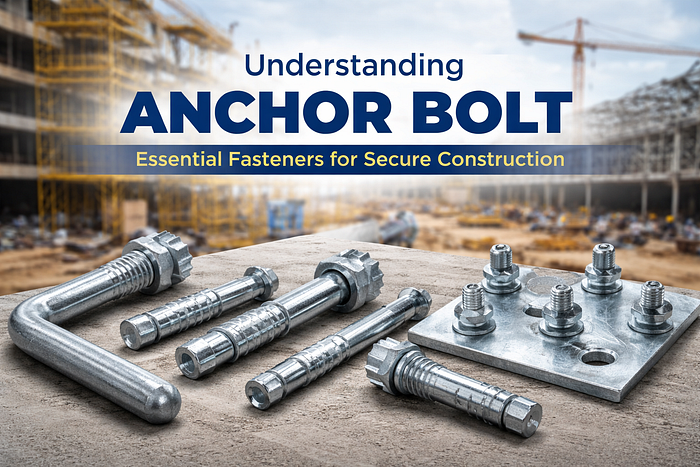
Anchor bolts come in various shapes and sizes, and their design depends on the type of load they must resist. The most common types include:
· Cast-in Anchor Bolts — embedded in freshly poured concrete before it cures
· Wedge Anchor Bolts — expand against concrete for firm grip
· Sleeve Anchor Bolts — used in pre-drilled holes for medium loads
· Plate Anchor Bolts — larger base plates for heavy equipment
How Anchor Bolts Work
The primary function of an anchor bolt is to transfer forces from the structural element into the concrete foundation. This transfer ensures that components remain stable and aligned under stress.
When an anchor bolt is installed correctly, it creates friction or mechanical interlock within concrete, allowing it to resist:
· Shear forces (horizontal stress)
· Tensile forces (pulling forces)
· Moment forces (rotational stresses)
For example, in construction of a steel-framed building, anchor bolts secure base plates that support vertical columns. These bolts prevent movement and provide a secure connection that can withstand heavy weight and dynamic loads.
Applications of Anchor Bolt in Construction
The versatility of anchor bolts makes them indispensable in many construction fields:
1. Structural Steel and Concrete Framing
Anchor bolts secure steel columns, beams, and frames to concrete slabs or foundations, ensuring alignment and load transfer.
2. Heavy Machinery Installation
Industrial equipment with moving parts must be secured to avoid vibration damage. Anchor bolts offer stability and reduce wear and tear.
3. Bridges, Towers, and Utility Structures
Critical infrastructure that experiences high wind and load stress relies on robust anchor systems for safety.
4. Residential and Commercial Buildings
From securing stair railings to anchoring support posts, anchor bolts provide stability in everyday structures.
Choosing the Right Anchor Bolt
Selecting the right anchor bolt depends on several factors, including:
· Type of Load — Will the bolt bear vertical, horizontal, or tensile loads?
· Concrete Strength — High-strength concrete may require specific bolt designs.
· Environmental Conditions — Corrosive environments may need galvanized or stainless-steel anchors.
· Installation Method — Cast-in anchors vs. post-installed anchors require different procedures.
Design engineers often consult building codes and structural standards to determine specifications that ensure safety and performance.
Why Anchor Bolt Matters
The importance of an anchor bolt cannot be overstated in modern construction. Without properly selected and installed anchor bolts:
· Structures could shift or collapse
· Heavy equipment could become unstable
· Buildings may develop cracks due to improper load transfer
· Safety risks to workers and residents increase significantly
Whether in a skyscraper, manufacturing plant, bridge, or home renovation, anchor bolts are one of the silent heroes of the built world.
Conclusion
In conclusion, the anchor bolt is a fundamental fastener in construction that ensures structural stability, safety, and longevity. Understanding its types, functions, and applications helps engineers, builders, and contractors deliver secure and reliable projects. Next time you walk past a construction site, remember — behind every sturdy foundation stands the humble yet powerful anchor bolt.
Latest comments
No comments

About ✔ Terms ✔Privacy
Say and get NFT
© 2017-2022
«0xbt»
A world without censorship
0xbt[cat]0xbt.net